ACME
Tous les articles de cette revue sont soumis à un processus d’évaluation par les pairs.
An International Journal for Critical Geographies
Revue internationale de géographie critique
Revista internacional de geografía crítica
Volume 24, numéro 4, 2025
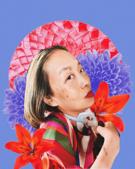
Blank(et) Spaces. 2025. Credit: Acetino et al.
Sommaire (6 articles)
Research
-
Espacializando a Galanter: Hacia un Derecho Procesal Situado
Andrés Rodríguez-Morales
p. 384–403
RésuméES :
En este trabajo defiendo la necesidad de llevar la geografía legal al derecho procesal. Para ello, propongo un diálogo entre los estudios de derecho y sociedad sobre las barreras de acceso a la justicia y un naciente canon en la geografía legal sobre la materialidad de las audiencias judiciales. Sostengo que ese diálogo es beneficioso porque permite tener en cuenta las dimensiones materiales o espaciales que podrían repercutir en impedir la satisfacción de necesidades jurídicas. Siguiendo la propuesta de Haraway del conocimiento situado, pongo a prueba esta propuesta teórica utilizando el estudio de caso de mi proyecto de investigación doctoral: el despido de un grupo de calibradores de ruta en Cúcuta (Colombia). Concluyo invitando a los geógrafos críticos a involucrarse en el estudio del proceso judicial.
-
Les projets artistiques du Plateau des Sept-Communes (Italie) : un contre-exemple de la portée transformatrice de la mise en art ?
Sylvain Guyot et Greta Tommasi
p. 404–425
RésuméFR :
Sur le Plateau des Sept-Communes (Vénétie, Italie) de nombreux projets artistiques sont nés au cours des deux dernières décennies. Leur présence rappelle des mécanismes déjà observés dans d’autres territoires de faible densité où un processus de mise en art peut accélérer les reconfigurations sociales et territoriales en place, en la place à émerger de nouveaux enjeux socio-environnementaux, voire en remettant en jeu les équilibres de pouvoir et de domination entre les acteurs. La portée transformative des nombreux projets artistiques in situ présents sur le Plateau a donc été questionnée de manière critique : ce cluster artistique peut-il vraiment alimenter de nouvelles dynamiques territoriales ? Les mutations sont en réalité encore peu visibles, au point que le Plateau des Sept-Communes pourrait constituer un contre-exemple de la portée transformative de la mise en art. Cette dernière induit finalement plus une valeur patrimoniale reproductrice des dynamiques déjà en place qu’une capacité transformatrice capable de proposer un autre récit pour le territoire, exception faite d’une toute petite minorité de projets. On note cependant quelques signaux faibles de transformation reposant sur l’attraction de nouveaux publics ou l’implication de nouveaux acteurs exogènes. Ces différences d’ambitions et de finalités quant aux investissements artistiques viennent renforcer l’idée de mise en art en pointillé sur le Plateau au service d’une identité locale et d’un statu quo politique, bien plus que d’une reconfiguration sociale et politique du territoire.
IT :
Questo articolo analizza il processo di mise en art nell’Altopiano dei Sette Comuni, nelle Prealpi italiane. In questo territorio di media montagna, situato tra le Alpi e la pianura padana, le dinamiche di ricambio sociale, osservate nella maggior parte dell’arco alpino, restano marginali. L’Altopiano ha tuttavia un immaginario territoriale ben definito e condiviso, strutturato intorno ai temi dell’ambiente, del patrimonio locale et della Prima guerra mondiale. I numerosi progetti artistici nella natura e/o in situ, sviluppatisi negli ultimi due decenni, sono legati a questo immaginario. L’indagine su questo cluster di progetti artistici ha permesso di mettere in luce le contraddizioni di questo territorio. Da un lato, une grande frammentazione politica, malgrado la presenza di una forte identità territoriale. Dall’altro lato, il territorio permette di osservare i limiti del processo di mise en art che, spesso presentato come fonte du dinamismo socio-economico, qui resta incompleto, a causa dell’assenza di riconoscimento politico e di cooperazione tra gli attori locali.
-
Qualifying Differently: Reflecting on an Alternative Approach to Doctoral Comprehensive Exams
Amy Kipp et Roberta Hawkins
p. 426–443
RésuméEN :
In this paper, we build on critical scholarship calling for a care revolution in geography by examining the comprehensive/qualifying exam (QE) process as a moment of intervention. In North America, aspiring doctoral candidates are typically expected to pass a QE before beginning their research. The way QEs are traditionally designed and implemented in the field of geography reinforces a particular canon and a certain way of being a geographer that excludes diverse knowledges. Doctoral students often experience preparing for and completing these exams as a specifically stressful and isolating period. Such an approach to QEs limits geography’s potential as a caring discipline. From our positions as a doctoral student and PhD supervisor, we use collaborative autoethnography to explore an alternative QE format. To better understand the potential of alternative QEs to support doctoral education in geography, we bring literature on QEs into conversation with feminist geography literature on care and academia, exploring the educational possibilities of practicing QEs in a way aligned with a caring academic praxis. Rather than being viewed as a rigorous and individualized test focused on creating ‘expert geographers,’ we suggest the discipline thinks about QEs as a process that encourages scholars to practically and relationally engage with diverse ways of knowing. Despite its potential, doing QEs differently within an uncaring university system can be challenging. It requires a great deal of relational care work to be done well. In conclusion, we consider how geographers might begin to practice QEs differently in order to imagine the discipline, and academia, otherwise.
Interventions
-
Research as Organizing: On the Challenges, Precarity and Commitment of Movement Scholarship
Rae Baker, Daniela Aiello, Elsa Noterman, Ashley Hernandez, Sterling Johnson, Marina Chavez et Jeff Masuda
p. 444–463
RésuméEN :
Community organizing as a mode of scholarly praxis remains marginal and undermined within academic institutions by approaches to scholarship that have been determined objective and professional (Raphael and Matsuoka 2023). Reflecting on this challenge is a crucial priority among new generations of movement-scholars who encounter institutions that are content with reproducing the neoliberal academic status quo, signaled by growing labour precarity, extractive knowledge practices, and the metastasizing bureaucratization of higher education (Brackmann 2015). To integrate the praxis of community organizing or ‘movement work’ into one’s scholarly practice is often viewed as an affront to the objective distance and command for unbiased approaches to research demanded by institutional research ethics boards and even peer review processes. Movement scholarship is an approach to research that reinforces the material and political goals of social movements and spaces above knowledge production, and a stark contrast to traditional paradigms of research. Inspired by a roundtable held during the 2023 AAG, here we take up the challenges of movement scholarship as a paradigm of research that enables a scholarly praxis we conceptualize as ‘Research as Organizing’. We focus on: (1) the practice of research as organizing through movement scholarship, (2) the barriers faced to achieving traditional definitions of scholarly success through a movement-orientation, and (3) how movement scholarship can be supported through relational and institutional shifts within academia. We understand this shift as being central to recapturing the “radical geography spirit” (Castree 2000) and commanding space within the discipline and academic institutions at large.
Roundtables
-
Pushing Boundaries: Reflections on the 2022 International FEMGEOG Conference
Rachel Colls, Jennifer Fluri, Brenda Boonabaana, Kate Coddington, Anindita Datta, Caroline Faria, Sarah Klosterkamp, Zoë Meletis, Amy Trauger, Jill Williams et Nancy Worth
p. 464–487
RésuméEN :
The following paper discusses and reflects upon the practices of organizing and attending the 2022 hybrid International Feminist Geography Conference (FEMGEOG), held in a range of physical and virtual locations and settings and across time zones. Through a series of short reflections written by members of the organizing committee it considers the practices of conference planning and organization alongside people’s experiences of their involvement and participation at different stages of the endeavour. The title of the conference, Pushing Boundaries, represents how the ethos and organisation of the conference sought to push against pandemic related travel restrictions, academic hierarchies of knowledge production and the financial inequities of conference attendance. It aimed to foster new means of connection, community and ways of relating to each other, and our research, through its international, multi-hub format. The paper also discusses the tensions and difficulties of organising an event of this kind, with reference to workload, funding and the technological demands and competencies required to foster inclusivity and connection. These reflections work as a means to provide advice and support for feminist geographers in the development of similar, future events.
Translations
-
Blank(et) Spaces: Weaving a Transfeminist Geography of Precarity in Academia
Francesca Acetino, Annachiara Autiero, Noemi Bergesio, Michela Bonato, Barbara Brollo, Francesca Colla, Laura Eccher, Giulia Ferrante, Erika Garozzo, Martina Loi, Roberta Mingo, Mariasole Pepa, Francesca Sabatini et Alice Salimbeni
p. 488–498
RésuméEN :
The paper presents a collective autoethnography of fourteen transfeminist scholars from diverse geographical backgrounds, exploring the experience of precarity within the Italian academic landscape. We have developed a supportive network, a virtual space where we could share our struggles in the competitive and isolating neoliberal academic system, away from its toxicity that often leaves us exhausted and burdened. Responding to the call from the transfeminist journal Lüvo for contributions on feminist and decolonial geographies, we engaged in a reflexive process that led us to imagine ourselves as islands within an archipelago, ultimately transforming into a patchwork blanket that is a metaphor for our solidarity and interconnectedness. We examine themes of loneliness, anxiety, and hypermobility, revealing how these experiences intersect with gender dynamics and academic hierarchies. Our work is about care and community, as we wove together our stories to challenge the neoliberal structures of academia. Through this collective work, we aim to illuminate the complexities of our experiences and foster alliances. We hope that others will join us in our struggle.