ACME
Tous les articles de cette revue sont soumis à un processus d’évaluation par les pairs.
An International Journal for Critical Geographies
Revue internationale de géographie critique
Revista internacional de geografía crítica
Volume 24, numéro 3, 2025
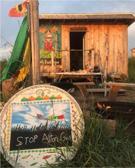
Poster advertising the Jackson People’s School initiative at the Boys & Girls Club of West Jackson, Fall 2019. Photo Credit: Noel Didla.
Sommaire (6 articles)
Research
-
Airing the Ungeographic: Anacostia Unmapped and Black Geographies of Gentrification in Washington, DC
Suzanne Nimoh
p. 260–277
RésuméEN :
In 2019, Washington, DC was the fastest gentrifying city in the United States (Helmuth 2019). Once known as a Chocolate City, tens of thousands of Black residents have been displaced in recent decades. Anacostia, a predominantly Black neighborhood east of the Anacostia River in Washington, DC, is one of the areas intensely impacted by gentrification. This article examines the use of storytelling as resistance to gentrification in Anacostia, through the radio show Anacostia Unmapped. Through oral history analysis, I demonstrate how Black residents of Anacostia use storytelling to create alternative maps of their communities, countering dominant maps that erase them. I argue through radio, residents share and create Black geographic knowledge, despite narratives of gentrified modernity assigning them as ungeographic. I analyze three vignettes from Anacostia Unmapped to demonstrate how residents unmap cartographic exclusion and housing displacement, and remap geographies of care and intimacy. My analysis of Anacostia Unmapped shows how the medium of radio produces space at varying scales, forefronting residents' sense of place outside of the modern visual and cultural aesthetics of modernity, and narrating Black relationships to the city at intimate scales. I extend scholarship on Black soundscapes and gentrification, arguing the stories aired on Anacostia Unmapped are sonic maps of retention, resistance, and care. My work also brings an examination of racial power to Euro-centric scholarship on radio geographies.
-
Jackson People’s School: Student-Centered Pedagogy as a Planning Initiative
Sage Ponder, Willie Jamaal Wright, Fayola Jacobs, Noel Didla, Theron Wilkerson et Akil Bakari
p. 278–297
RésuméEN :
In August of 2017 an audit of Jackson Public Schools (JPS) conducted by the Mississippi Department of Education listed the school district as in a state of “extreme emergency.” This emergency also coincided with other local infrastructural emergencies. Consistent with its historical disposition towards the majority-Black capital city, the Republican-dominated Mississippi State Legislature proposed an austerity measure that would result in the state’s takeover of the city’s public school system. This measure would have removed the rights of JPS and parents to determine how their children would be educated, supplanting their agency with that of an often-hostile State administrative body. JPS staved off the takeover, in part, via a partnership with the Kellogg Foundation. Desiring to supplement the city’s public-private partnership with a student-centered approach to education, and in coordination with the Lumumba Mayoral administration’s method of governing through community consensus, the authors initiated the Jackson People’s School in early 2020. Modeled after the Freedom Schools of the Civil Rights Movement, Jackson People’s School was a collective reading group designed to provide political education to teenage Jacksonians. Positioning the project as a radical planning initiative, we discuss the origins, pedagogy and successes and challenges of launching the Jackson People’s Schools project immediately prior to the onset of a global pandemic in order to illustrate how politically oppressed groups build the skills to engage in radical planning practices in restrictive political environments.
-
Challenging Neoliberal Paradigms: Non-State Organisations and Urban Community Gardens in Cape Town
Tinashe P. Kanosvamhira
p. 298–315
RésuméEN :
The literature identifies a dual effect of urban community gardens, emphasising their potential to resist neoliberal urbanism while also acknowledging their inadvertent role in perpetuating it. This paper advances this discourse by analysing the paradoxical dynamics of urban community gardening in Cape Town, South Africa. It investigates the socio-political contexts and mechanisms that shape these dual dynamics, revealing how urban gardens simultaneously challenge and reinforce neoliberal governance. Drawing on qualitative methods, including document analysis, website reviews, and semi-structured interviews with non-state organisations in Cape Town, the study demonstrates how neoliberal environments cultivate gardens that uphold neoliberal values, often overlooking the structural drivers of food insecurity in disadvantaged areas. Crucially, this research identifies specific conditions such as the ideological orientation of civil society actors and their capacity to promote critical reflexivity and collective action that determine whether urban gardening initiatives resist or perpetuate neoliberal urbanism. The findings highlight the role of civil society organisations in raising awareness among urban gardeners and fostering participation in food justice initiatives that aim to empower marginalised communities and transform urban food systems. This paper underscores the importance of understanding the institutional contexts that mediate these interactions to advance equitable and sustainable food systems.
-
Amplitud, Densidad y Diferencialidad de los Habitares: Nociones para Su Comprensión
Paulino Alvarado Pizaña
p. 316–344
RésuméES :
El presente ensayo busca aportar a la comprensión del habitar entendiéndolo como expresión corporal y territorial de la vida, situada y concreta, en presencia y concordancia con el lugar habitado. Su finalidad es realzar sus características, posibilidades y potencias.
En un primer momento [Panorámica de los habitares] el escrito expone la relación conflictiva del habitar con el urbanicismo, comprendido éste como la tendencia espacio-temporal dominante de la modernidad capitalista. El cual, a partir de las condiciones espacio-temporal y vivenciales que impone, limita y coarta las posibilidades de desenvolvimiento de los habitares. Para ello, se problematizan las situaciones de distintas geografías, que muestran la forma general y común en que esta tendencia actúa en el orbe.
En una segunda etapa [Acercamientos al habitar] se ahonda en la noción de habitar, contrastando con lo anterior, lo que el habitar implica como tendencia de vida encarnada, territorializada. Se realza el principio relacional del acto habitativo y de los lugares con los que se corresponde, abundando en la vincularidad que promueve y entreteje en toda escala. Se plantea que el habitar configura las diversas culturas materiales mediante las vivencias, como percepciones y expresiones corporales cotidianas, arraigadas y materializadas en el territorio.
Con base en lo anterior, la última parte [Tres nociones para comprender los habitares] propone una triada conceptual que aporta al entendimiento y esclarecimiento del habitar en el contexto de la espacialidad contemporánea. Esta triada se conforma por las categorías de amplitud, densidad y diferencialidad propuestas por Bolívar Echeverría. Ellas nos permiten comprender las formas específicas del habitar como existencias situadas y contextualizadas material e históricamente, que se coproducen en tensa interrelación con la modernidad capitalista.
Roundtables
-
Reorienting Critical Geographies of Global Development: A Conversation with Han Cheng, Patricia Daley, Ruben Gonzalez-Vicente, Diana Vela-Almeida, and Joseph Awetori Yaro
Mariasole Pepa, Giles Mohan, Han Cheng, Patricia Daley, Ruben Gonzalez-Vicente, Diana Vela-Almeida et Joseph Awetori Yaro
p. 345–362
RésuméEN :
This roundtable on reorienting critical geographies of global development was organized in response to “The Critical Geography Conversations: ACME’s 20+ Year Anniversary”. It brought together scholars from diverse backgrounds—including Han Cheng, Patricia Daley, Jospeh Yaro, Ruben Gonzalez-Vicente, and Diana Vela-Almeida—to reflect on significant shifts in global development geographies, such as the rise of the Global South, the consolidation of Brazil, Russia, India, China, and South Africa (BRICS), especially China’s role, and the urgency to question established spatial categories. The conversation created a space for collective reflection on the possibilities and challenges of reshaping how we teach, research, and engage with the world. In an era where unlearning and rethinking are vital to envisioning alternative futures, this dialogue emphasized the importance of forging new ways of being, feeling, and thinking about development and geography.
FR :
Cette table ronde sur la réorientation des géographies critiques du développement mondial a été organisée en réponse à « The Critical Geography Conversations : Le 20e anniversaire de l'ACME ». Elle a rassemblé des chercheurs de divers horizons - dont Han Cheng, Patricia Daley, Ruben Gonzalez-Vicente et Diana Vela-Almeida - pour réfléchir aux changements significatifs dans les géographies du développement mondial, tels que la montée du Sud global, la consolidation des BRICS, en particulier le rôle de la Chine, et la nécessité de remettre en question les catégories spatiales établies. La conversation a créé un espace de réflexion collective sur les possibilités et les défis liés à la refonte de nos méthodes d'enseignement, de recherche et d'engagement dans le monde. À une époque où désapprendre et repenser sont essentiels pour envisager des avenirs alternatifs, ce dialogue a souligné l'importance de forger de nouvelles façons d'être, de sentir et de penser le développement et la géographie.
ES :
Esta mesa redonda sobre la reorientación de las geografías críticas del desarrollo mundial se organizó en respuesta a «Las Conversaciones sobre Geografía Crítica: ACME's 20+ Year Anniversary». Reunió a académicos y académicas de diversas formaciones -entre ellos Han Cheng, Patricia Daley, Rubén González-Vicente y Diana Vela-Almeida- para reflexionar sobre los cambios significativos en las geografías del desarrollo mundial, como el ascenso del Sur Global, la consolidación de los BRICS, especialmente el papel de China, y la necesidad de cuestionar las categorías espaciales establecidas. La conversación creó un espacio para la reflexión colectiva sobre las posibilidades y los retos de remodelar nuestra forma de enseñar, investigar y relacionarnos con el mundo. En una época en la que desaprender y repensar son vitales para vislumbrar futuros alternativos, este diálogo puso de relieve la importancia de forjar nuevas formas de ser, sentir y pensar sobre el desarrollo y la geografía.
IT :
Questa tavola rotonda sul riorientamento delle geografie critiche dello sviluppo globale è stata organizzata in risposta alla call lanciata dalla rivista ACME: “The Critical Geography Conversations: ACME's 20+ Year Anniversary”. Ha coinvolto accademiche e accademici di diversa formazione - tra cui Han Cheng, Patricia Daley, Ruben Gonzalez-Vicente e Diana Vela-Almeida - per riflettere sui cambiamenti in atto nelle geografie dello sviluppo globale, come l'ascesa del Sud globale, il consolidamento dei BRICS, in particolare il ruolo della Cina, e la necessità di mettere in discussione le categorie spaziali consolidate. La conversazione ha creato uno spazio di riflessione collettiva sulle possibilità e le sfide di rimodellare il nostro modo di insegnare, ricercare e confrontarci con il mondo. In un'epoca in cui il disimparare e il ripensare sono atti fondamentali per immaginare futuri alternativi, questo dialogo ha sottolineato l'importanza di forgiare nuovi modi di essere, sentire e pensare lo sviluppo e la geografia.
Interviews
-
Critical Geographies (A Collection of Readings) Two Decades On: A Conversation with Harald Bauder and Salvatore Engel-Di Mauro
Christian Anderson
p. 363–383
RésuméEN :
In this conversation, Harald Bauder and Salvatore Engel-Di Mauro reflect on Critical Geographies: A Collection of Readings—an open access collection published in 2008 by Praxis (e)Press, which was then the book publishing arm of ACME. Bauder and Engel-Di Mauro begin by reflecting on their experiences editing and releasing the collection, situating these experiences in relation to conditions of academic knowledge production and shifting formations of critical and radical geography at the time. Consideration of those conditions and formations then remain central throughout the conversation, which further interweaves broader discussions of pedagogy, competing notions of impact, the politics of publication and citation, and more.